
For undergraduate research mentors
Supervising undergraduate researchers
Undergraduate research is part of what makes TRU, TRU. If you mentor a student who is new to research, this page shows what’s different and how the modules apply.
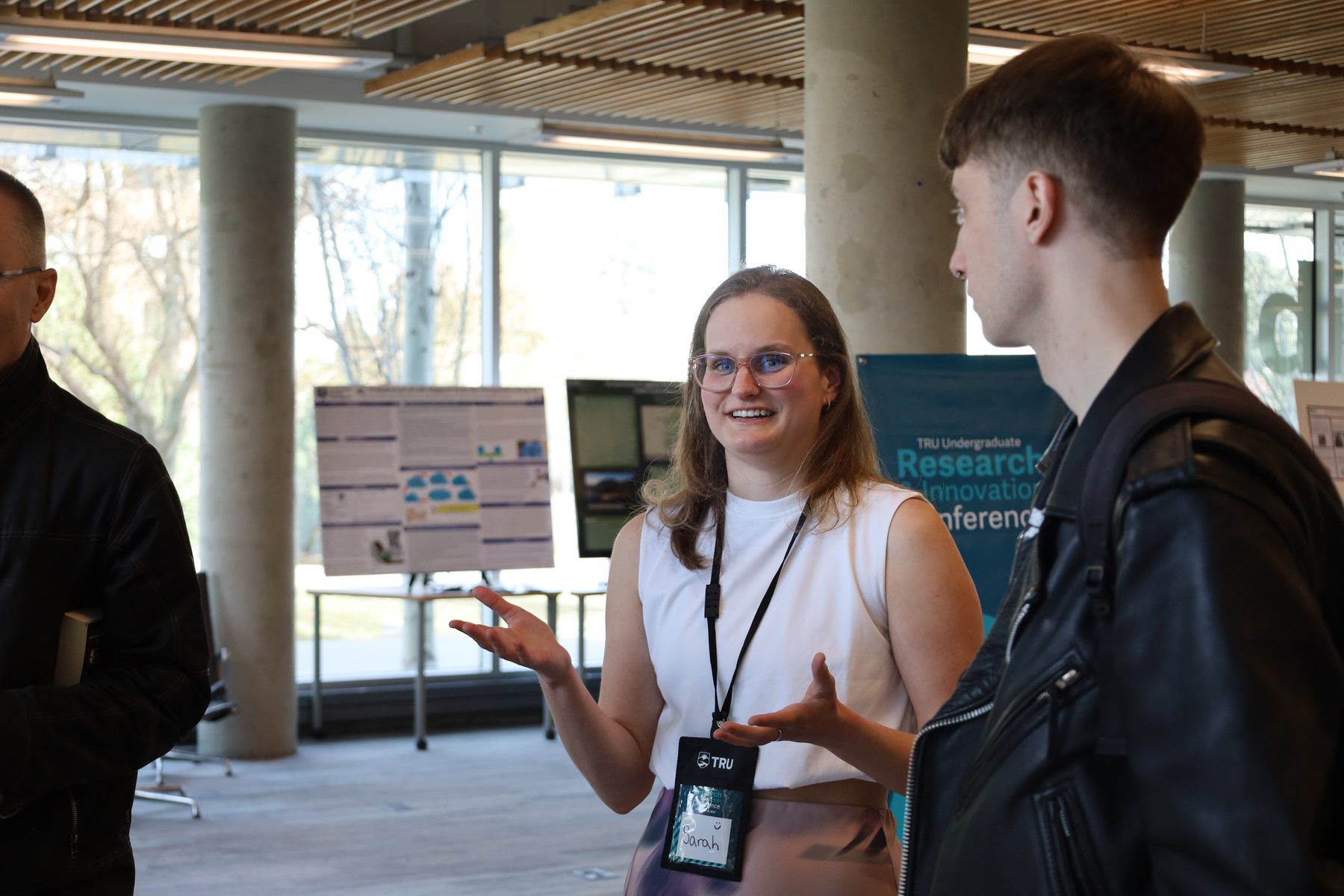
TRU has championed undergraduate research for more than a decade, guided by a pathway TRU students co-created: Discover opportunities for research, Connect with people doing research, Engage in mentored research, and Become a lifelong learner. Faculty mentors are the constant at every step.
$7.6M+
awarded to undergraduates for faculty-mentored research, 2013 to 2023
1,700+
students funded through UREAP, Research Apprentice, RA and NSERC USRA awards
18%
of award recipients were Indigenous students
1,725
undergraduate presentations at TRU’s research conference since 2013
Source: A Decade of Supporting and Enhancing Undergraduate Research at TRU, TRU Student Research.
What’s different about undergraduate supervision
It’s often a first
Many students are meeting research for the first time. They may not know what they don’t know, or what they’re allowed to ask.
Time is short
A 16-week summer award or a single-term project leaves little room to recover from a slow start. Structure early matters.
Belonging is fragile
TRU’s cultural mapping research found early-career students often see research as “not for them” and feel like imposters. Mentors change that.
Training undergraduate RAs is incredibly rewarding, especially when they continue onwards to receive CIHR Master’s Awards. As a faculty member, seeing your students succeed is truly fulfilling.
Dr. Juanita-Dawne Bacsu, A Decade of Supporting and Enhancing Undergraduate Research at TRU
Your first two weeks
- Meet and set expectations. Use a light version of the expectations exercise: hours, how to ask for help, how often you’ll meet.
- Scope the project to the time. Agree a question the student can realistically answer within the award or course, with a clear deliverable.
- Check ethics early. If the work involves people, the student will need the TCPS 2 CORE tutorial and ethics approval, which takes time.
- Set a weekly check-in. A short standing meeting, with the student bringing the agenda, builds momentum and confidence.
- Plan the finish line. A poster, a presentation or a paper gives the project a shape. TRU’s Undergraduate Research and Innovation Conference is a natural one.
- Talk about what’s next. Graduate school, careers, the Undergraduate Research Certificate. A one-page IDP works well here.
Programs you may supervise through
- Undergraduate Research Experience Award Program (UREAP): students conduct their own original research under a faculty mentor.
- Research Apprentice: the student assists with your research, with a focus on training them as a researcher. See undergraduate research opportunities.
- NSERC Undergraduate Student Research Awards: 16-week summer awards in the natural sciences and engineering, with a faculty top-up.
- Undergraduate Research Assistants: paid roles on faculty projects.
- Knowledge Makers: TRU’s award-winning Indigenous research network, with Elder-led learning, mentoring and publication.
- Research Coach and Research Rookies: peer mentoring that brings research into first- and second-year classes.
How the modules apply
Getting Started: your role, style and expectations
- Your Role: your role as guide and advocate is larger with a first-time researcher; as evaluator, gentler.
- Supervisor Styles: start with more structure and support than you would for a graduate student, then loosen.
- Supervisor Expectations: a short, plain-language version of your expectations prevents most problems.
Planning: the path and the growth beside it
- Planning Your Student’s Progress: the same arc, compressed: question, plan, ethics, research, sharing.
- Professional Development: first posters, first presentations and first reference letters are professional development.
- Developing an IDP: one page, two goals, one reflection at the end of term.
Progress: momentum, meetings and inclusion
- Monitoring Student Progress: weekly check-ins with one concrete deliverable each time.
- Scheduling Effective Meetings: a lab or group meeting can be an easier first step than a one-to-one.
- Creating Inclusive Meetings: invite questions and lived experience. It can decide whether a student stays in research.
TRU resources
- Undergraduate Research at TRUPrograms, events and supports from TRU Student Research.
- Undergraduate Research OpportunitiesUREAP, Research Apprentice, NSERC USRA, Ambassadors and the conference.
- UREAPAward details and deadlines.
- Knowledge MakersIndigenous research network and journal.
- Mentoring StudentsResearch Services’ page for faculty mentors.
- Research EthicsEthics review at TRU.
Sources and adaptation notes
- Statistics and quotation from A Decade of Supporting and Enhancing Undergraduate Research at TRU (TRU Student Research).
- This page was created for TRU Supervisor Supports and has no Brock equivalent.
PreviousSupervision Toolkit